
Behind the Curtain, Ambition and Desire Become a Dangerous Game of Power
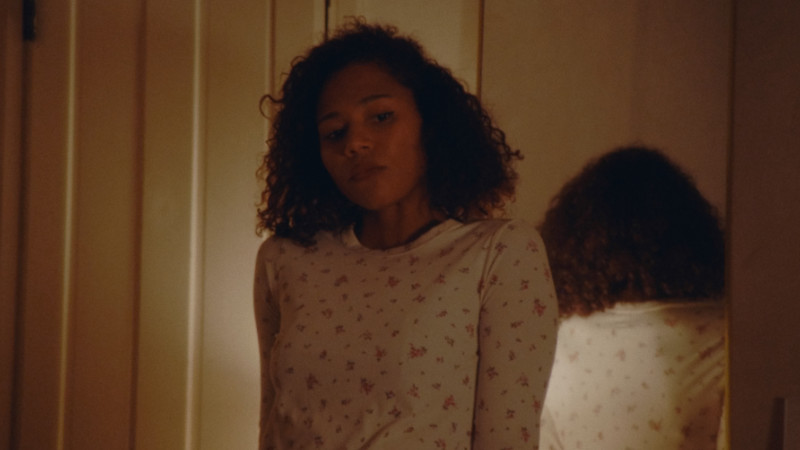
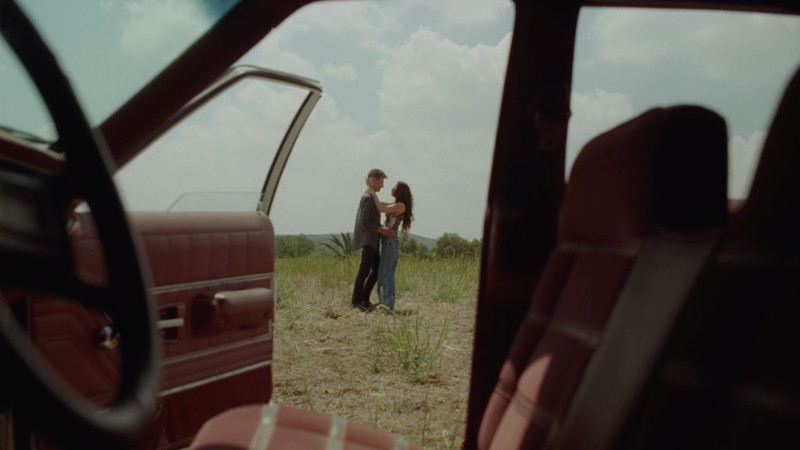
Backstage, directed by Émile V. Schlesser, takes us into the intimate and often unforgiving world of theater, where the boundaries between artistic ambition and personal desire begin to unravel. When Lukas, a young actor, finds himself drawn into a complicated relationship with Cosima, the demanding director who holds his future in her hands, the rehearsal room becomes a battleground of attraction, manipulation, and control. As professional expectations collide with increasingly personal stakes, the line between performance and reality grows dangerously thin.
Drawing from personal experience, Schlesser explores the unsettling grey areas of abusive relationships, where seemingly innocent gestures can gradually evolve into something far more sinister. Through a layered interplay of theatrical performance and intimate psychological drama, Backstage challenges conventional notions of victimhood, consent, and responsibility, revealing how difficult it can be to recognize manipulation when ambition, admiration, and desire become entangled. Following his previously featured shorts Superhero and Vis-à-Vis, Schlesser returns with a thought-provoking examination of the power dynamics that can quietly take hold behind the scenes.
Below, we speak with director Émile V. Schlesser about the personal experiences that inspired Backstage, navigating the complexities of power and consent, and using the theater to blur the boundaries between performance and reality.

Backstage explores how ambition and mentorship can gradually turn into manipulation. What first drew you to this story and the world of theater?
We’ve all heard stories of abusive situations, of individuals taking advantage of their authority and overstepping boundaries—especially in our entertainment industry, where all kinds of abuse unfortunately persist, seemingly more than elsewhere. Perhaps it’s the close and intense relationships that develop in an enclosed environment like the theater, where creatives have to engage with raw emotions and physical intimacy, that can create a complicated mix of feelings, misunderstanding, attraction, ambition, and control. And sometimes, those dynamics can gradually turn sour.
I myself have experienced an unpleasant episode of that nature. It took me almost a decade to unpack what really happened and how things had evolved, one subtle step at a time, into something that felt almost impossible to escape. So, telling this story was quite therapeutic for me.
The abuse of power develops through small boundary crossings rather than one obvious moment. How did you approach building that progression without making it too explicit?
In conversations with people who have lived through abusive relationships, many will tell you that it often starts with the smallest gestures. You begin to wonder whether something actually happened, or whether you simply misinterpreted it. There’s no obvious reason to protest, because those first boundary crossings are so subtle. As a decent human being, you don’t want to create a scene, make a false accusation, or damage a relationship when there’s no clear threat.
It’s also very awkward to come forward and talk about it. So, it can feel safer to convince yourself that it didn’t happen, or that the person didn’t mean it that way. But as the behavior becomes more obvious and invasive, speaking up becomes more and more difficult, because the question would arise why you didn’t say something earlier.
The theater is an especially interesting setting because performance and reality can easily overlap. How did you use that environment to blur those boundaries?
In Backstage, the play the actors are performing already portrays an abusive relationship between a man and a woman. So, things quickly become very meta, and it becomes difficult to discern where fiction ends and reality begins. When Lukas, our protagonist, struggles with his performance, he actively seeks direction and guidance from Cosima, his director, who is determined to help him get there, by any means necessary. One could argue that everything she says and does, all her subtle manipulations and psychological games, is ultimately in service of his performance, even if her methods are highly unorthodox. At least, that’s how someone like Cosima would justify her actions.
Attraction, ambition, and coercion become deliberately difficult to separate. How important was it to preserve that ambiguity from the young actor’s perspective?
It was the single most important, and also the most challenging aspect of the writing process. My co-writer, Jonas Brand, and I were adamant about not falling back on an oversimplified portrayal of victim and perpetrator. We didn’t want anything black and white. Instead, what interested us, because it felt closer to how these things actually develop in reality, were the tricky grey areas and subtle nuances where the dynamics constantly shift.
We wanted to create truthful characters caught in a complex relationship that would leave audiences with enough ambiguity to keep questioning and discussing after the screening. Whose fault is it, really? Nothing is that clear-cut. Lukas isn’t simply a victim, while Cosima, although deeply flawed, has many relatable traits that make it possible to empathize with her. That’s what makes it so complicated.
The director holds enormous influence over both his career and his sense of self. How did you approach creating her character without reducing her to a conventional antagonist?
No one sees themselves as a villain. In real life, everyone has their reasons and justifications for their behavior. Cosima may not even realize that her actions could be seen as abusive, especially because at first, Lukas doesn’t openly protest. In the beginning, he may even enjoy her attention and feel flattered that someone of her standing takes such an interest in him. But the way he responds to her advances could easily send her the wrong signal, making her think he wants it too. She doesn’t realize that, given the power imbalance (he’s much younger, inexperienced, and under her control), it would be very difficult for him to push back or communicate his discomfort.
When things finally escalate, Cosima is genuinely stunned when he pushes her away. From her perspective, it looks like he started the whole thing by playing along and sending her signals. She does have a point when she spits out, “You should have said no earlier.” But that’s exactly the dilemma. It’s not that simple.
I think Sascha Ley is brilliant as Cosima. I wrote the part for her. I knew she could be demanding, seductive, fearless, and vulnerable—all of these contradictory attributes that her character needed. She loved the challenge and took the part head-on!

Performance is naturally central to Backstage, both within the play and the film itself. How did you work with your actors to navigate those different layers of performance?
All my actors have experience on the theater stage, so they were already well equipped to navigate these different styles of acting. The challenge was switching between the colorful, artificial, theatrical style of the play and the much subtler, intimate naturalism of film acting. Both had to work simultaneously on an actual stage and on camera, often with the camera right up in their faces.
We had a lot of fun rehearsing before the shoot and playing with improvisation. Sometimes I would let them keep going even when things became so “meta” that no one was quite sure whether we were still acting-acting or not. I’m glad they pulled it off the way they did, all of them did such a fantastic job.
How did cinematography and staging help express the shifting power dynamic between the two characters?
My DP, Thorsten Harms, and I spent a lot of time developing a visual language to reflect the characters’ power play. We chose three colors—red, blue, and gold—and gave each a specific meaning, using them very consciously throughout the film. Red symbolizes abuse and gradually appears more and more as the story unfolds. Blue, by contrast, represents liberation. The two colors are in constant dialogue with one another throughout the entire film.
Lighting was another important part of our visual grammar. Whenever Lukas is being seduced, for example, we used a cozy, golden light to make the atmosphere feel warm and inviting. In terms of staging, we played with lines in the composition and how actors cross them within the frame. The first kiss scene is a good example of this. It was great fun coming up with conceptual ideas and giving attentive viewers something to chew on!
The film challenges the idea that someone in an abusive situation can “simply say no.” What did you want audiences to understand about why recognizing and resisting manipulation can be so complicated?
If you haven’t lived through a similarly abusive situation, especially in your youth when you are inexperienced and more easily impressionable, it’s easy to look at these stories from the outside and judge the victims, thinking, “That would never happen to me.” But it really isn’t that simple. So many factors can make it difficult to even recognize that you’re being manipulated or taken advantage of.
And once you do realize what’s going on, it can feel like it’s already too late to speak up. On one hand, what’s paralyzing you is fear—the fear of losing career opportunities, being punished, or provoking the abuser’s temper. On the other hand, it can also be love, admiration, or friendship. You may feel close to the person, or believe you’ve had a good collaboration, and simply don’t want to hurt their feelings. And the longer you avoid taking action, seeking help, or clearly communicating how you feel, the messier it gets.
What do you hope stays with viewers after Backstage, particularly when thinking about power and responsibility within creative industries?
I’m sure many people watching what happens to Lukas will know exactly what he’s going through, from first-hand experience. Sadly, abuse of power, whether in private life or the workplace, is something many have to endure, and of course, women are disproportionately affected by it.
One of the reasons we chose to make the protagonist a young man being abused by an older woman (besides the fact that the story is based on a personal experience) was to further encourage men in the audience to connect and sympathize with the victim. Most women already know what it feels like to be caught in a situation like this. But men? Perhaps not so much. Maybe telling the story this way can help a wider audience recognize how these situations develop and how easily they can happen. It can happen to anyone. Anyone can be abused—and anyone can abuse.

What are the books, podcasts, or even YouTube channels that you recommend young filmmakers get their hands on?
I’m a lover of film history, so I would suggest you study the classics. And you should really love it, no matter how old the movie is that you’re watching. Apart from that, I enjoy Thomas Flight’s video essays on film theory, or In Depth Cine’s YouTube channel, for the more technically inclined.
Can you share with us some of your favorite short films you’ve seen lately?
There were so many, but the first one that pops to mind is the Austrian Die gemeinen Kleinigkeiten by Florian Moses Bayer, that I’ve seen at several German festivals this year. I thought it had such well-crafted, charming characters, while being really funny, heartwarming, and just hugely entertaining.